Exploring Intangible Cultural Heritage: Tie-Dye
Tie-dyeing has a history of about 1,500 years in China, with the earliest existing artifact being the resist-dyed silk from the Eastern Jin Dynasty. During the Tang Dynasty, tie-dyeing reached its peak, and resist-dyed textiles became very popular, making it fashionable for nobles to wear resist-dyed clothing. In the Northern Song Dynasty, due to the complex process and high labor costs of tie-dyeing, the court once banned it, leading to the decline and eventual disappearance of the technique. In recent years, with the development of efforts to protect intangible cultural heritage, the Bai ethnic group's tie-dyeing techniques from Dali, Yunnan, and the tie-dyeing techniques from Zigong, Sichuan, have been successively included in the national list of intangible cultural heritage.
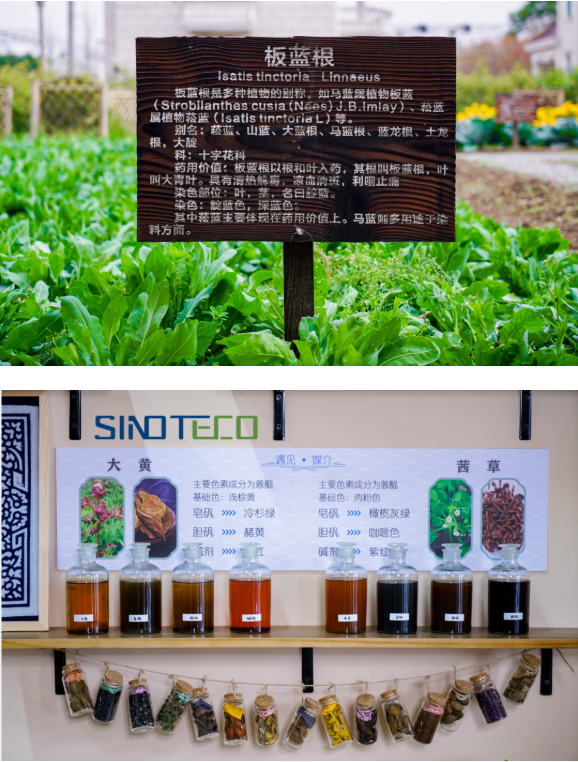
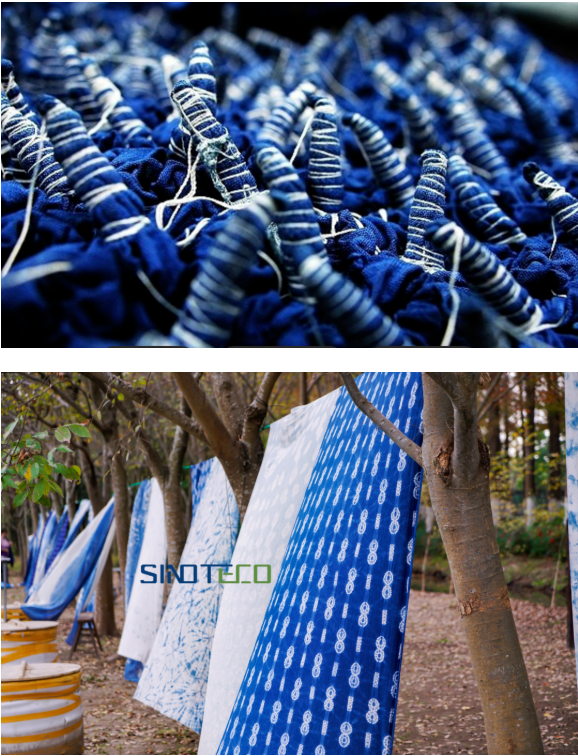
Tie-dye typically uses white cotton fabric or cotton-linen blended white fabric as raw materials. The main dye comes from the indigo solution of natural plants such as Lithospermum erythrorhizon, Isatis indigotica, and Artemisia carvifolia, especially Isatis indigotica. It is the rhythm of blue and white flowing across the fabric. In the past, the Isatis indigotica used for dyeing was wild on mountains, belonging to perennial herbaceous plants with pink small flowers. Later, due to increased demand, dyers started planting it on the mountains themselves. Every March and April, they harvest the plant, soak it to extract water, pour it into large wooden dye vats, add some lime or industrial alkali, and then use it for dyeing.
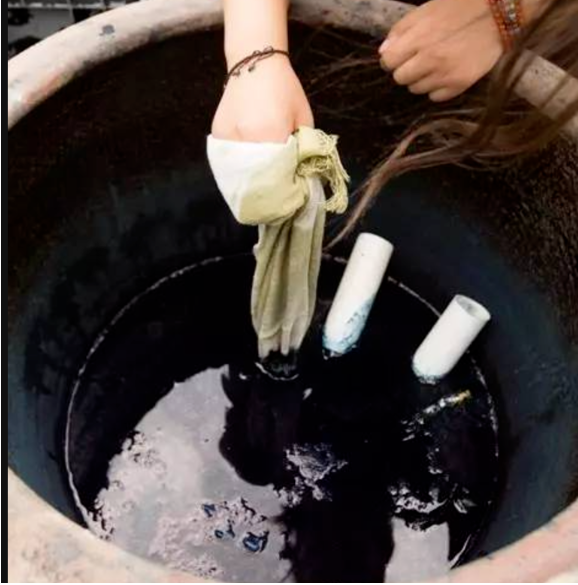
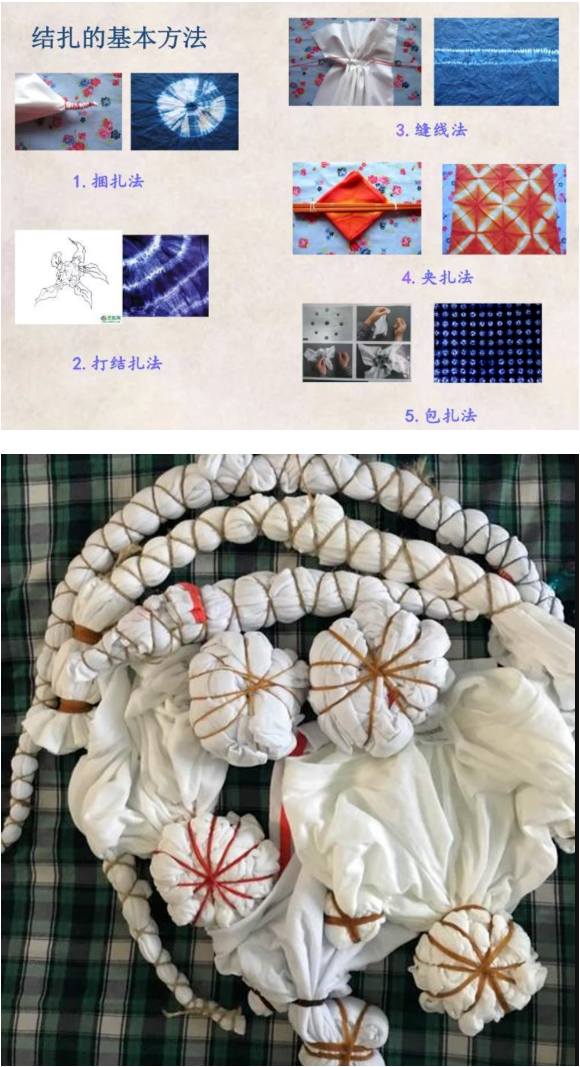
Tie-dye involves using tools such as threads, ropes, and needles to combine fabrics through various techniques like tying, sewing, binding, stitching, and clamping before dyeing them. The key feature of this technique is that it uses thread to tie knots on the fabric to be dyed, then dyes the fabric, removes the knots, and finally unbinds the thread. The main steps include drawing patterns, knotting, soaking, dyeing, steaming, drying, untying, rinsing, and pressing, with the primary processes being pattern tying and dyeing. The technical focus lies in the knotting method and dyeing skills.
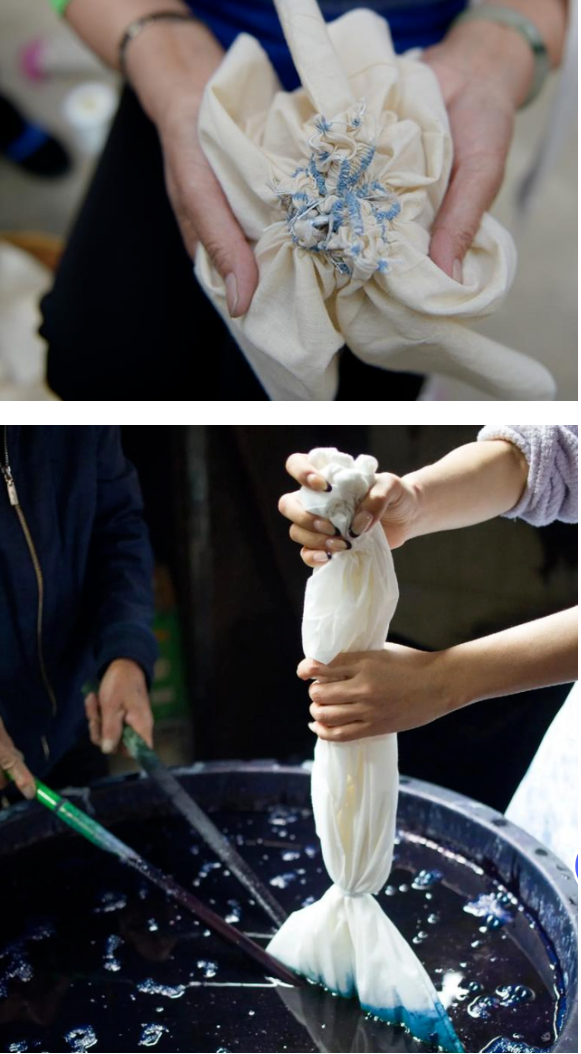
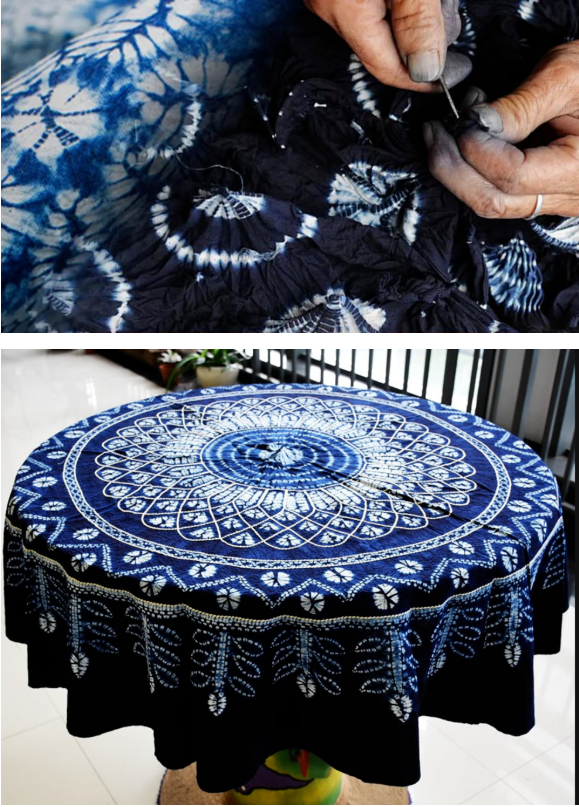
The main dyeing methods for tie-dye include stitching and binding. The stitching method involves using needles and threads to create patterns by sewing and then tightening them to prevent dye penetration. Its characteristic is the ability to freely create pattern forms. The steps can be divided into folding, sewing, tightening, soaking, and dyeing. Soaking aims to prevent the dye from penetrating too quickly and ensures deep penetration at the stitched areas. The binding method has two types. One involves gathering the fabric into points and tying it with thread before dyeing, resulting in radiating dots, square, or circular patterns, and can produce four-flower or cross-patterns when folded. Methods such as fish egg tie-dye, drunken eye tie-dye, and round palace tie-dye are all created through this binding technique. The other method involves binding the fabric in segments along its width and dyeing it, resulting in stripe patterns. The knotting method involves folding the raw silk in different positions either along the warp and weft or diagonally and creating knots with the fabric itself, which is then soaked and dyed to achieve white resist patterns.
- Add:Rm 1408, East Mansion No.1500, Century Avenue, Pudong Shanghai
- Tel:021-50828089
- Email:info.sino@sinoteco.com
021-50818802
sinotex2@sinotexs.com
www.sinoteco.com




Sinoteco
Naturoot
all rights reserved© Shanghai Sinotex Eco Co., Ltd.